

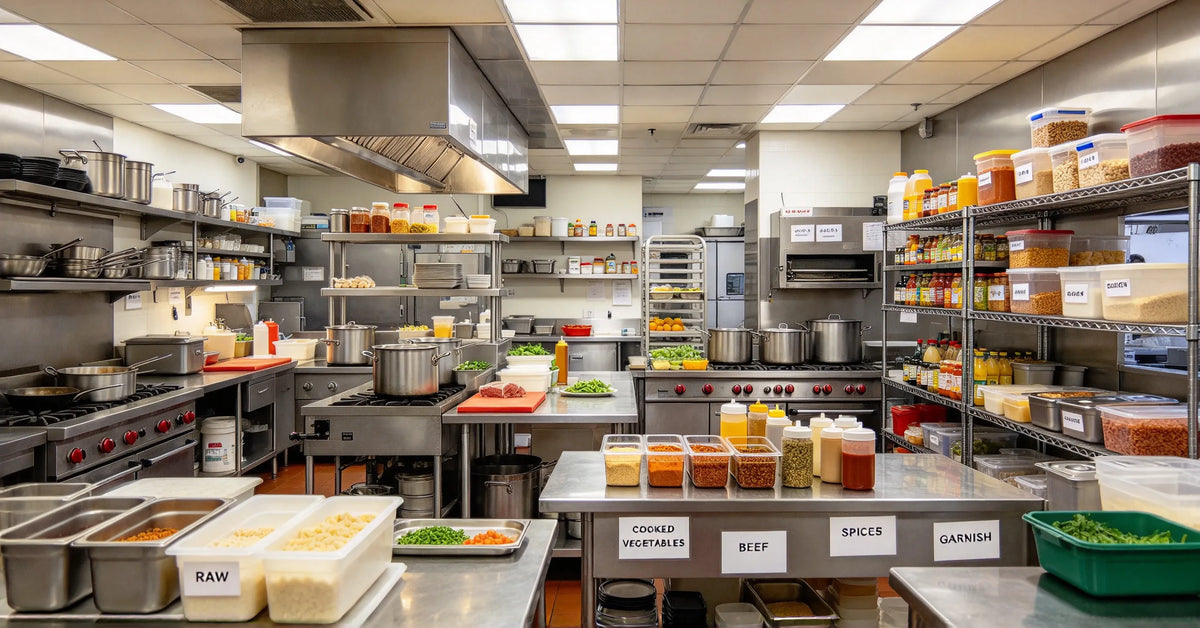
The journey toward safe meals starts well before your plate arrives at the table. Unclear ingredient names, missing preparation dates, and unidentified containers in restaurants, commercial kitchens, and home pantries can all lead to avoidable mistakes.
Food labels help reduce these risks by making important information easier to identify, including ingredients, allergens, preparation dates, and storage instructions. With a suitable food label maker, kitchens can create consistent labels that help staff and family members make more informed decisions about the food they prepare, store, and serve.
Table of Contents
- How Do Food Labels Help Prevent Food Safety Risks?
- What Information Should Food Safety Labels Include?
- How to Choose the Right Food Labels for Different Kitchen Environments
- How to Create Clear and Reliable Food Labels with a Food Label Maker
- Simplify Kitchen Labeling with the NIIMBOT M2 Label Maker
- Conclusion: Make Food Safety Easier with Better Labeling
1. How Do Food Labels Help Prevent Food Safety Risks?
Food labels are a simple but valuable part of a food safety system. They help people identify ingredients, understand handling requirements, and recognize when stored food needs attention. Here are three ways clear labeling can support safer food handling.
Identify Ingredients and Potential Allergens
Food allergies can cause serious reactions, so knowing what a food contains is essential. In the United States, packaged food labels provide information about major allergens, including milk, eggs, peanuts, wheat, soy, tree nuts, fish, crustacean shellfish, and sesame. This information helps consumers identify ingredients that may trigger an allergic reaction.
In commercial kitchens, clearly labeled ingredient containers can also help staff distinguish between similar-looking ingredients. However, labels alone cannot prevent allergen cross-contact. Proper cleaning, separate equipment where appropriate, and staff training remain essential. For more information, see the FDA's food allergy guidance.
Track Preparation Dates and Food Storage Time
Without clear date labels, kitchen staff may struggle to determine when food was prepared or how long it has been stored. Preparation dates and discard dates help teams follow consistent food rotation procedures and identify products that should no longer be used.
Date marking is particularly useful for refrigerated, ready-to-eat foods that require time and temperature control. It should be used alongside appropriate refrigeration, handling practices, and established food safety procedures. See the CDC's restaurant date-marking guidance for additional information.
Reduce Ingredient Mix-Ups and Cross-Contact Risks
Clearly labeled containers help staff distinguish ingredients used for different recipes, dietary requirements, and preparation tasks. Labels such as "CONTAINS PEANUTS" or "DAIRY" can make important handling information more visible when the information is accurate and supported by proper kitchen procedures.
Food safety tip: Clear labels work best alongside organized storage, clean preparation surfaces, allergen-control procedures, and correct temperature management. A label supports safe handling; it does not replace it.
2. What Information Should Food Safety Labels Include?

The information required on a food label depends on the product, how it is packaged, where it is sold, and how it will be used. Packaged foods may be subject to specific ingredient, allergen, nutrition, and other labeling requirements. Labels placed on food containers in kitchens can provide additional information to help staff manage ingredients and prepared foods.
The following table summarizes useful information to consider for kitchen labels. Not every item is necessary for every container, and packaged products must follow applicable labeling regulations.
| Label Information | Purpose | Example |
|---|---|---|
| Food or ingredient name | Identifies the contents of a container. | Ground Cinnamon |
| Ingredients and allergens | Highlights relevant ingredients and potential allergens. | Contains Peanuts |
| Preparation or opening date | Shows when food was prepared or a container was opened. | Prepared: Oct 12 |
| Use-by or discard date | Supports food rotation according to applicable guidance. | Discard: Oct 15 |
| Storage instructions | Reminds users of appropriate storage conditions. | Keep Refrigerated |
| Nutrition and warnings | Provides relevant consumer information when applicable. | Nutrition Facts; applicable warnings |
For example, a prepared-food container might use a simple label like the one below. The dates are illustrative only and are not a recommendation for a specific food storage period.
CHICKEN SOUP
| PREPARED | OCT 12 |
| DISCARD | OCT 15 |
| STORAGE | KEEP REFRIGERATED |
3. How to Choose the Right Food Labels for Different Kitchen Environments
Not all kitchen environments place the same demands on labels. Moisture, oil, heat, frequent handling, and cleaning can affect how well a label adheres and remains readable. Choosing materials that suit the actual environment helps keep important information visible.
| Kitchen Environment | Labeling Considerations | Typical Uses |
|---|---|---|
| Hot kitchen areas | Check the label's rated temperature range, adhesive compatibility, and permitted exposure conditions. | Equipment identification and labels near cooking areas |
| Spice storage | Use clear ingredient names, legible fonts, and a consistent layout. | Paprika, cumin, cinnamon, black pepper |
| Wet or oily prep areas | Check water resistance, oil resistance, adhesion, and compatibility with cleaning routines. | Food containers and ingredient bins |
| Refrigerated storage | Choose materials and adhesives suitable for the container surface and expected condensation. | Prepared food, refrigerated ingredients |
High Temperature Labels for Hot Kitchen Areas
Areas near ovens, cooking equipment, and heated surfaces may require high temperature labels designed for specific temperature conditions. Before choosing a label, check its rated temperature range, adhesive compatibility, surface suitability, and expected exposure time.
A label that works well on a room-temperature storage container may not perform reliably on a hot surface. Do not assume every thermal transfer label is heat-resistant enough for every kitchen application. Follow the label manufacturer's specifications, and never place labels where they could create a food contamination risk.
Spice Jar Labels for Clear Ingredient Identification
Spice jar labels make it easier to identify seasonings such as paprika, cumin, cinnamon, black pepper, and chili powder. Clear names reduce confusion when multiple ingredients are stored in similar-looking containers.
For busy kitchens, keep label wording short and easy to read. Use a consistent layout across containers, and include opening dates or relevant allergen-handling information when appropriate.
Waterproof and Oil-Resistant Labels for Food Preparation
Food preparation areas are often exposed to water splashes, grease, condensation, and frequent handling. Labels designed for wet or oily environments may last longer than ordinary paper labels in these conditions.
However, water resistance, oil resistance, and temperature resistance are different properties. Review the label material and adhesive specifications for the intended surface and cleaning routine rather than relying on general durability claims.
4. How to Create Clear and Reliable Food Labels with a Food Label Maker
A food label maker can make kitchen labeling more consistent and reduce the need to handwrite every container. Follow these steps to build a practical labeling routine.
Step 1: Choose Suitable Label Material
Match the label material and adhesive to the container surface, moisture level, temperature, and cleaning requirements.
Step 2: Keep the Information Simple
Use clear ingredient names and add relevant dates, storage instructions, or allergen information as needed.
Step 3: Standardize Date Formats
Use a consistent format for preparation, opening, and discard dates so staff can read them quickly.
Step 4: Apply Labels Correctly
Apply labels to clean, dry, suitable surfaces. Avoid covering important product information or placing labels where they could contaminate food.
Step 5: Review and Replace Labels
Replace labels that are damaged, detached, outdated, or no longer readable.
Restaurants may use one template for prepared foods and another for dry ingredients. At home, small labels can help distinguish spices, baking ingredients, and pantry containers.
Important reminder: A printed date does not automatically mean food is safe to eat. Food safety also depends on correct storage temperatures, hygienic handling, and following applicable food safety procedures.
5. Simplify Kitchen Labeling with the NIIMBOT M2 Label Maker
Creating easy-to-read labels can be simpler with the NIIMBOT M2 Commercial Kitchen Label Maker. This thermal transfer label printer is designed for a variety of labeling tasks in commercial kitchens and other organized spaces.

300 DPI Printing
Print crisp, legible text and supported label elements for ingredient names, dates, and storage information.
20–50 mm Label Widths
Choose compatible label widths for different container sizes and kitchen labeling needs.
Customizable Templates
Use the NIIMBOT App to create labels with text, dates, icons, barcodes, and QR codes.
These options help users create consistent labels for spice jars, ingredient bins, food storage containers, shelves, and kitchen supplies. The M2 supports compatible thermal transfer labels and ribbons, so choose consumables according to the conditions where the labels will be used.
If labels will encounter moisture, oil, frequent handling, or heat, check the specifications of the selected label material and adhesive. Not every compatible consumable offers the same resistance properties.
Make Kitchen Labeling More Consistent
Create clear labels for ingredients, food containers, storage areas, and kitchen supplies with the NIIMBOT M2.
Explore NIIMBOT M26. Conclusion: Make Food Safety Easier with Better Labeling
Food labels help people make more informed choices by identifying ingredients, highlighting relevant allergens, tracking storage time, and communicating handling instructions. They can also improve organization in restaurants, food preparation areas, and home kitchens.
Choosing suitable label materials, keeping information clear, and reviewing labels regularly makes a labeling system more useful. A reliable food label maker can simplify daily labeling tasks for both businesses and home users.
The NIIMBOT M2 offers flexible label creation for many kitchen organization needs. When combined with proper food handling, hygiene, and temperature control, a consistent labeling routine can become a valuable part of a well-organized food safety system.
Share:
NIIMBOT B1 vs B1 Pro: Which Label Maker Is Best?